
Denied for an Apartment Because of Your Credit? Here's What to Do
⚡ The Quick Answer
A denial based on credit is not permanent. Common next steps include disputing report errors, offering a larger deposit, and finding landlords with flexible screening. Meaningful credit improvement may take 60–90 days for many consumers, depending on your starting point. Here's how to know which path fits your situation.
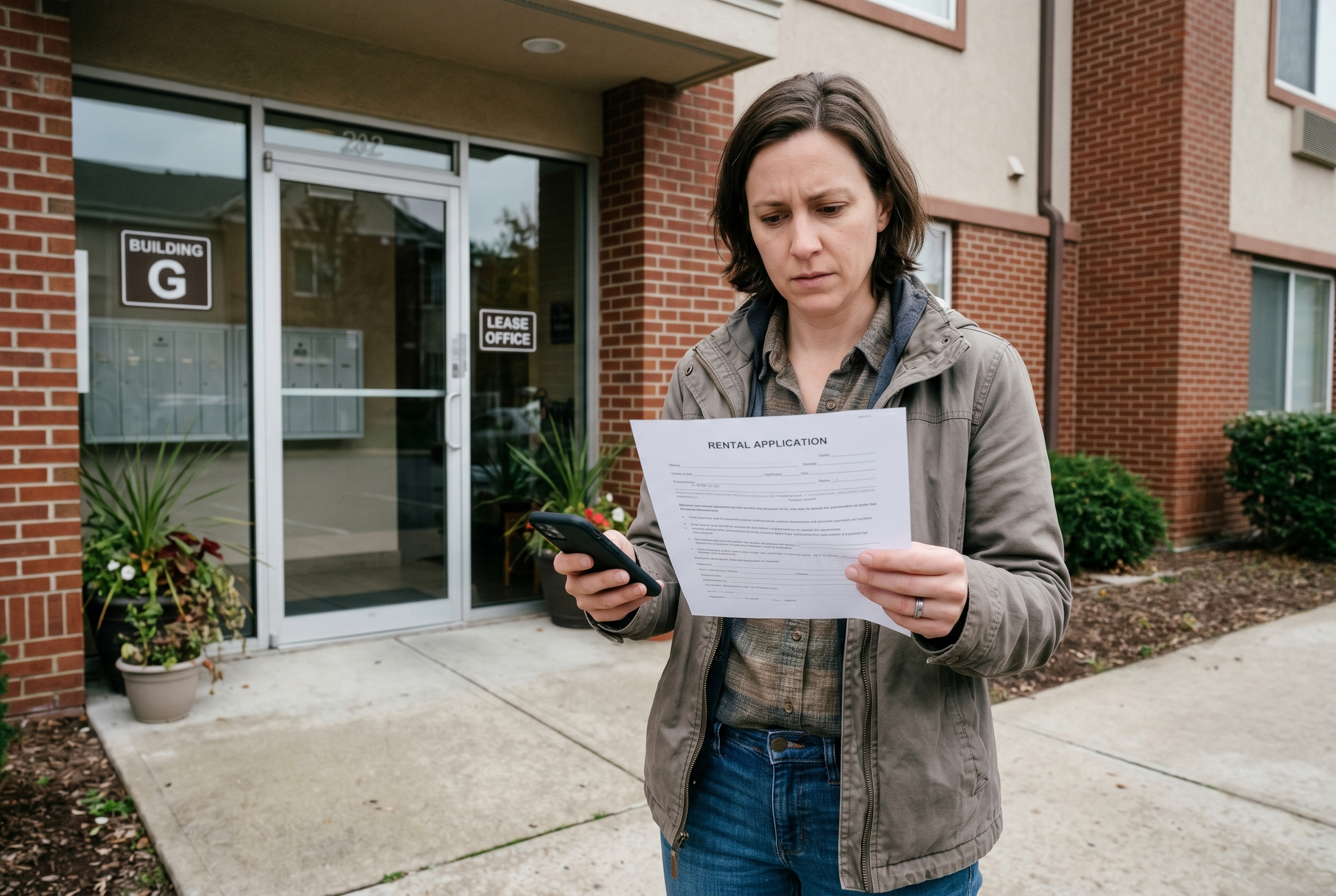
Getting denied for an apartment because of your credit is one of the most frustrating experiences a renter can face, especially when you need housing now. If you just got that denial letter, you are not alone, and the situation is not hopeless.
Most landlords check credit as part of a standard screening process. Understanding what they looked at, and why the denial happened, is the first step toward doing something about it. This guide walks through the immediate options available to you today, a realistic timeline for building your credit, and how to track your progress along the way.
If you are searching for ways to rent an apartment with bad credit or wondering how to recover after a denied apartment bad credit decision, the steps below apply directly to your situation.
Why Landlords Check Credit and What They're Looking For
Landlords use credit reports to assess whether a prospective tenant is likely to pay rent on time and fulfill the lease. Most landlords pull a report from one of the three major credit bureaus, Equifax, Experian, or TransUnion, through a tenant screening service.
What they typically review:
- Payment history, late payments, collections, or charge-offs signal payment risk
- Outstanding debt, high balances relative to credit limits (credit utilization)
- Public records, evictions, judgments, or bankruptcies
- Credit score, a summary number that reflects the above factors
The CFPB notes that credit reports may contain errors affecting a consumer's score. Before taking any other action, pulling your own reports is worthwhile, not because disputing errors is a quick path to approval, but because inaccurate information has no place on your file.
The Score Thresholds Many Landlords Use
There is no universal minimum score for renting. Landlord requirements vary widely by property type, market, and management company. That said, industry sources and tenant screening guides commonly cite a range of a range some landlords and lenders may consider favorable.
To put that in context, FICO classifies scores in the following ranges:
| FICO Score Range | Category | Typical Landlord Reception |
|---|---|---|
| 670–739 | Good | Generally meets standard criteria |
| 580–669 | Fair | May require deposit or cosigner |
| 300–579 | Poor | Often denied at standard properties |
These categories are guidelines, not guarantees. A score of 610 does not automatically mean denial everywhere, and a score of 650 does not guarantee approval. Landlords also weigh income, rental history, and other factors alongside credit.
What to Do Right Now
A credit denial feels like a dead end, but there are practical options to explore this week while your score is still where it is.
1. Request and review your credit reports
Consumers in the U.S. can access free weekly credit reports from all three bureaus at AnnualCreditReport.com, which is the official CFPB-endorsed source. Review each report carefully for accounts you do not recognize, payments marked late that were on time, or balances that appear inaccurate.
Consumers generally have the right to dispute errors directly with the credit bureaus. The CFPB outlines the dispute process at cfpb.gov/consumer-tools/credit-reports-and-scores. Disputing a legitimate error, if one exists, may improve your score, but that process takes time and the outcome depends on the bureau's investigation.
2. Offer a larger security deposit
Many landlords, particularly independent owners of smaller properties, will work with applicants who have lower scores if those applicants can reduce the perceived risk in another way. Offering an additional month's rent as a security deposit, or prepaying two to three months upfront, is a concrete way to demonstrate reliability.
Ask the landlord directly whether a larger deposit would allow them to reconsider. Many will say yes, especially in markets where vacancies are costly.
3. Seek out flexible or private landlords
Large property management companies often apply automated, score-based screening with little room for exceptions. Smaller, independent landlords typically have more discretion. Focus your search on single-family rentals, duplexes, and smaller apartment buildings managed by private owners.
Platforms that let you filter by "no credit check" or "flexible screening" exist, though those listings often come with higher rents or other trade-offs. Review any lease carefully before signing.
4. Add a cosigner or guarantor
A creditworthy cosigner, someone with a strong score who agrees to be legally responsible for the lease if you default, can make an application viable for many landlords. This arrangement requires trust on both sides, so the conversation with a potential cosigner should be direct and honest about your situation.
Lease guarantor services also exist for renters who do not have someone willing to cosign. These services charge a fee, typically a percentage of annual rent, in exchange for backing your lease. Review terms closely and confirm the service is licensed in your state.
An Honest Timeline: What Is Realistic in 60 to 90 Days
Credit does not improve in a week. Anyone who tells you otherwise is misleading you. That said, consistent, on-time payment activity added to your file over 60 to 90 days can produce meaningful improvement for many consumers, depending on starting score, existing negative marks, and credit mix.
Here is what a realistic path can look like for someone starting at a score of 580 (Fair range under FICO):
The math: Bolster credit builder subscribers saw an average score increase of 102 points, on average. Based on Bolster users who bought credit builder and had two or more report pulls between 2/1/2025 and 6/1/2025. Results vary.
A consumer starting at 580 who experiences an improvement in that general range could potentially reach a range some landlords and lenders may consider favorable. That is not a guarantee for any individual, credit improvement depends on your specific file, how you use the product, and factors outside any single account. But the math illustrates why starting now, rather than waiting, matters.
| Timeframe | What May Be Possible | What Is Not Realistic |
|---|---|---|
| Week 1–2 | Dispute errors, open a credit builder account, check all three reports | Score change (activity not yet reported) |
| 30 days | First reporting cycle may appear; small score movement for some | Large score jump; removal of accurate negative items |
| 60–90 days | Consistent on-time payments may begin to move score meaningfully for many consumers | Guaranteed approval; complete credit turnaround |
Bolster reports to the major credit bureaus on a regular reporting cycle. Bureau update timing varies, and individual results depend on each bureau's processing schedule.
How to Track Your Progress
Tracking your score while you work toward a landlord threshold is practical and free. Here are the main options:
Free bureau access
AnnualCreditReport.com provides weekly free reports from Equifax, Experian, and TransUnion. These reports show the underlying data driving your score, payment history, balances, account age, and any negative marks. Checking regularly helps you catch errors early and confirms that new positive activity is appearing on your file.
Free score monitoring apps
Several apps provide free credit score access, including tools offered directly by the bureaus. These typically show a VantageScore or FICO estimate refreshed monthly. The specific score a landlord pulls may differ from what monitoring apps display, different bureaus and different score versions can produce different numbers, but directional movement is reliable and useful to track.
Watch the right factors
When monitoring your file, pay attention to: payment history (the most heavily weighted factor under FICO models), credit utilization on any revolving accounts, and whether new accounts are appearing and reporting correctly.
How Bolster Can Help
Bolster is a credit builder product, not a credit repair service. It does not remove items from your credit report or dispute negative accounts on your behalf. What it does is give you a structured way to add positive payment history to your credit file over time.
There is no hard credit inquiry on application with Bolster, and credit limits range from $1,500 to $10,000, higher than the $150–$750 range common among many competitors, according to publicly available competitor product disclosures as of May 2026.
For someone who was just denied for an apartment with bad credit and is starting the credit-building process now, the question is not whether improvement is possible. For many consumers, it is. The question is whether you start today or wait. Waiting does not move the number.
How We Approach This Topic
At Bolster, we ground our guidance in data published by the CFPB, FICO, and the major credit bureaus. We do not publish score-improvement timelines without qualifiers, and we do not claim our product guarantees any outcome. The 102-point average figure cited in this article is based on Bolster's own subscriber data, with the methodology disclosed. Every reader's situation is different, and we present ranges and averages rather than promises.
Frequently Asked Questions
How fast can someone realistically raise a credit score for an apartment?
Meaningful credit score improvement typically takes 60–90 days of consistent positive activity for many consumers. Score changes depend on your starting point, your credit mix, and whether any errors on your report are being corrected. There is no timeline that applies universally.
Can I rent with bad credit in 2026?
Many consumers with lower credit scores do find housing each year. Options that may be available include offering a larger security deposit, finding independent landlords with flexible screening criteria, or adding a creditworthy cosigner to the application. Requirements vary by landlord and market.
Does a denied apartment application hurt my credit score?
A landlord who runs a hard credit inquiry as part of the screening process will leave a mark on your report that may slightly lower your score for a short period. Many tenant screening checks are soft inquiries, which do not affect your score. Ask the landlord which type of pull they use before authorizing the check.
What credit score do most landlords require?
There is no single required score. Many landlords reference a range some landlords and lenders may consider favorable, though thresholds vary by property type, management company, and local market. Some landlords weigh income and rental history more heavily than credit score alone.
Can a credit builder account help me qualify for an apartment?
A credit builder account can help you add positive payment history to your file over time, which may improve your score for many consumers. Results vary depending on your starting score and your overall credit profile. Bolster credit builder subscribers saw an average score increase of 102 points, on average, based on Bolster users who bought credit builder and had two or more report pulls between 2/1/2025 and 6/1/2025.
Disclaimer
Bolster does not guarantee apartment approval, credit score increases, or approval for future credit products. Results depend on individual credit profiles, payment history, bureau reporting practices, and other factors.
Bottom Line
A denial for an apartment with bad credit is frustrating, but it can be a starting point rather than a stopping point. Disputing errors, negotiating with landlords, and adding positive credit activity now can move your score toward common landlord thresholds over 60–90 days for many consumers. Results vary, and no outcome is guaranteed.
Best for renters actively rebuilding: Start a credit builder account now to add payment history to your file while you search.
Best for renters who need housing immediately: Focus on larger deposit offers and flexible independent landlords first; work on credit in parallel.
Best for thin-file consumers: A credit builder account can be one way to begin adding positive payment history to your file.
Download Bolster and Start Building